Blog Posts
My Journey Building a 3MF Native Rust Library from Scratch
For the past few years, I’ve been getting more and more into 3D printing as a hobbyist. Like everyone, I started with one, a Bambu Lab X1 Carbon, which has now grown to three printers. I find the hobby fascinating as it entangles software, firmware, hardware, physics, and materials science.
As a software engineer, I’m naturally drawn to the software side of things (Slicer and Firmware). But what interests me most, is how the software interacts with the hardware and the materials. How the slicer translates the 3D model into instructions for the printer (G-Code). How the printer executes those instructions. How the materials behave under the printer’s control.
Read More
Linux Kernel v6.18 is Released: This is What's New for Compute Express Link (CXL)
The Linux Kernel v6.18 release brings several improvements and additions related to Compute Express Link (CXL) technology.
Release Highlights
Linux Kernel v6.18 includes 32 commits to the CXL and DAX subsystems:
| Category | Commits |
|---|---|
| New Features & Hardware | 1 |
| Bug Fixes | 4 |
| Refactoring & Cleanup | 5 |
| Testing | 2 |
| Other | 20 |
The v6.18 kernel cycle for CXL/DAX is defined by two architectural threads running in parallel: hardening the address-translation stack and untangling port initialization from topology discovery. On the translation side, the new SPA-to-DPA region mapping infrastructure lands alongside a dedicated root-decoder ops structure that formalizes how the host physical address space is projected into CXL’s device physical address space — including XOR-interleaving math that was previously implicit. These foundations make region geometry computable and auditable in ways that earlier releases left to convention.
Read More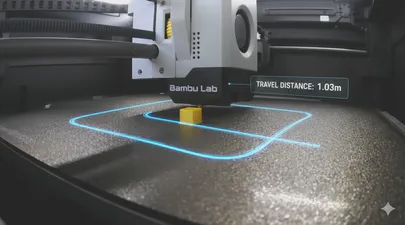
I Added a Feature to OrcaSlicer to Show Travel Distance and Moves
OrcaSlicer is a powerful and popular slicer for 3D printers, known for its rich feature set and active development community. In this blog post, we’ll take a closer look at a new feature I proposed and implemented that provides more insight into your prints: the display of total travel distance and the number of travel moves. See the feat: Display travel distance and move count in G-code summary for more details.
Read More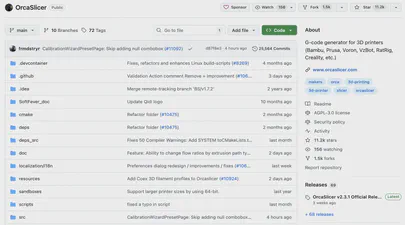
How to Build OrcaSlicer from Source on macOS 15 Sequoia - A Step-by-Step Guide
Building OrcaSlicer from source on macOS 15 (15.6.1 Sequoia) can be straightforward, but recent changes in macOS, Xcode, and CMake require some extra care. This guide updates the official instructions with important tips and fixes from this GitHub issue to avoid common build issues.
For this article, we will be using this build system:
- Apple MacBook Pro M1 (Apple Silicon)
- macOS 15.6.1 (Sequoia)
- Orca Slicer 2.3.1 from https://github.com/SoftFever/OrcaSlicer
Prerequisites
Before you start, ensure you have the following installed:
Read More
Linux Kernel v6.17 is Released: This is What's New for Compute Express Link (CXL)
The Linux Kernel v6.17 release brings several improvements and additions related to Compute Express Link (CXL) technology.
Release Highlights
Linux Kernel v6.17 includes 32 commits to the CXL and DAX subsystems:
| Category | Commits |
|---|---|
| New Features & Hardware | 1 |
| Bug Fixes | 6 |
| Refactoring & Cleanup | 3 |
| Other | 22 |
The v6.17 cycle for CXL and DAX is a consolidation release rather than a feature-heavy one, with 32 commits that reflect the subsystem maturing around correctness, specification compliance, and architectural hygiene. The most visible theme is alignment with CXL specification revision 3.2: the Common Event Record has been updated to match the new spec, the Memory Sparing Event Record gains kernel tracing support for the first time, and additional validity checks land for corrected volatile memory error (CVME) counts in both DRAM and General Media Event Records. This work strengthens the kernel’s ability to correctly interpret and surface CXL RAS events to userspace tooling and monitoring infrastructure.
Read More
How to Build acpidump from Source and use it to Debug Complex CXL and PCI Issues
This article is a detailed guide on how to build the latest version of the acpidump tool from its source code. While many Linux distributions, like Ubuntu, offer a packaged version of this utility, it’s often outdated. For developers and enthusiasts working with modern hardware features, particularly those related to Compute Express Link (CXL), having the most current version is essential.
Before you begin, it’s important to remove any old, conflicting versions of the tools. If you have previously installed the acpica-tools package from your distribution’s repository, you should remove it to prevent conflicts.

Linux Kernel v6.16 is Released: This is What's New for Compute Express Link (CXL)
The Linux Kernel v6.16 release brings several improvements and additions related to Compute Express Link (CXL) technology.
Release Highlights
Linux Kernel v6.16 includes 37 commits to the CXL and DAX subsystems:
| Category | Commits |
|---|---|
| New Features & Hardware | 2 |
| Bug Fixes | 6 |
| Refactoring & Cleanup | 8 |
| Documentation | 3 |
| Other | 18 |
The Linux v6.16 kernel cycle is dominated by one clear theme: hardening CXL memory device reliability and serviceability through the EDAC subsystem. Four new control features land in this release — patrol scrub, Error Check Scrub (ECS), soft Post Package Repair (PPR), and memory sparing — each exposing a distinct class of CXL 3.0 memory maintenance operations to userspace through a consistent sysfs interface. Alongside these, support for the PERFORM_MAINTENANCE command provides the underlying mechanism that drives scrub and repair operations on compliant devices. Taken together, this work moves CXL from a device class that Linux can merely enumerate and map to one where the kernel actively participates in proactive memory health management.

Is Your Application Really Using Persistent Memory? Here’s How to Tell.
Persistent memory (PMEM), especially when accessed via technologies like CXL, promises the best of both worlds: DRAM-like speed with the durability of an SSD. When you set up a filesystem like XFS or EXT4 in FSDAX (File System Direct Access) mode on a PMEM device, you’re paving a superhighway for your applications, allowing them to map files directly into their address space and bypass the kernel’s page cache entirely.
But here’s the crucial question: after all the setup and configuration, how do you prove that your application’s data is physically residing on the PMEM device and not just in regular RAM? I’ve run into this question myself, so I wrote a small Python script to get a definitive answer using SQLite3 as an example application. However, before we proceed with the script, let’s examine how you can verify this manually.
Read MoreCategories
- 3D Printing ( 7 )
- AI ( 11 )
- Books ( 2 )
- Cloud Computing ( 1 )
- Conferences ( 2 )
- CXL ( 24 )
- Data Center ( 2 )
- Development ( 2 )
- Events ( 2 )
- Hardware ( 1 )
- How To ( 35 )
- HowTo ( 1 )
- Linux ( 32 )
- Machine Learning ( 1 )
- OrcaSlicer ( 2 )
- Performance ( 2 )
- Persistent Memory ( 1 )
- PMEM ( 1 )
- Product Manager ( 1 )
- Projects ( 3 )
- Servers ( 1 )
- Storage ( 1 )
- System Administration ( 2 )
- Troubleshooting ( 4 )
- Ubuntu ( 1 )
- Vector Databases ( 1 )
Tags
- 3D Printing
- 3MF
- ACPI
- ACPI-CA
- Acpidump
- Active-Memory
- Agent
- Agent Runtime
- Agent Skills
- Agent Teams
- AI
- AI Agents
- AI Engineering
- AI Infrastructure
- AMD
- API
- Apple Silicon
- Arcade
- Artificial Intelligence
- AST Extraction
- AutoGen
- AWS EC2
- Bash
- Benchmark
- Blackwell
- Blister Pack
- Book
- Boot
- Bootable-Usb
- Build From Source
- Buyer's Guide
- C
- C-2
- Chat Completions
- Chat GPT
- ChatGPT
- Claude Code
- Clflushopt
- Cloud
- CMake
- Code Tunnel
- Code-Server
- Codespaces
- Codex
- Compute Express Link
- Cpu
- Crawling
- CrewAI
- Custom GPT
- Custom-Kernel
- CXL
- CXL 1.0
- CXL 1.1
- CXL 2.0
- CXL 3.0
- CXL Devices
- CXL Specification
- Data Center
- DAX
- Daxctl
- Debugging
- DeepSeek-R1
- Dell
- Development
- Device-Mapper
- DGX Spark
- Dm-Writecache
- Docker
- Docker Compose
- DRAM
- Edge
- Enfabrica
- Esxi
- Fastfetch
- Featured
- Fedora
- Firecrawl
- Firmware
- Free AI Models
- Free LLM API
- Frequency
- FSDAX
- G-Code
- GB10
- Gemma3
- Generative Prompt Engineering
- Git
- GLM-4.7
- Governor
- Gpg
- GPT
- Gpt-3
- Gpt-4
- GPU
- Grafana
- Graph Database
- Graphify
- GraphRAG
- Groq
- H3 Platform
- Hermes-Agent
- Home Lab
- HPE
- Iasl
- Intel
- Ipmctl
- Java
- Kernel
- Knowledge Graph
- Kvm
- LangChain
- LangGraph
- Lenovo
- Linux
- Linux Kernel
- Linux-Volume-Manager
- LiteLLM
- Llama.cpp
- LLM
- LLM Fallback
- LLM Gateway
- Local LLM
- Lvm
- Machine Learning
- MacOS
- Mainline
- MAME
- Max_tokens
- MCP
- MCP Server
- MemMachine
- Memory
- Memory Management
- Memory Mapping
- Memory-Tiering
- Micron
- Microsoft
- ML
- Mmap
- Model Serving
- MoE
- Movdir64b
- MTP
- Mysql
- Napkin Math
- NDCTL
- Neo4j
- Neofetch
- NIM
- NUMA
- Nvdimm
- NVFP4
- NVIDIA
- NVIDIA Builder
- NVIDIA Developer Program
- NVIDIA NIM
- Ollama
- Open Source
- Open Source Maintenance
- Open WebUI
- OpenAI-Compatible
- OpenAI-Compatible API
- OpenClaw
- OpenRouter
- OpenWebUI
- Optane
- OrcaSlicer
- Pagemap
- PCIe
- Percona
- Performance
- Performance Tuning
- Persistent Memory
- Personal Branding
- Physical Address
- Physical Memory
- Pmdk
- PMem
- Powersave
- Procfs
- Product Manager
- Programming
- Prometheus
- Prompt Engineering
- Python
- Qdrant
- QEMU
- Qwen3
- Qwen3.6
- RAG
- Rate Limiting
- Reasoning Models
- RedHatAI
- Remote Development
- Retimers
- Retrieval Augmented Generation
- Rust
- Samsung
- Self-Hosting
- Server
- Servers
- SGLang
- SNC
- Spec-Driven Development
- Speculative Decoding
- SSH
- STREAM Benchmark
- Sub-NUMA Cluster
- Sub-NUMA Clustering
- Subagents
- Supermicro
- Switches
- Sysadmin
- Sysfs
- System Administration
- System Information
- System-Ram
- Technical Documentation
- Terminal
- Thinking Mode
- Tiered-Memory
- Token Reduction
- Travel Moves
- Tree-Sitter
- Tutorial
- Ubuntu
- Ubuntu 22.04
- Ubuntu 25.04
- Uv
- Vector Databases
- VFIO
- Virtual Memory
- Virtualization
- VLLM
- Vmware
- Vmware-Esxi
- Vpmem
- VS Code
- Vsphere
- Web Scraping
- Website
- Window
- Windows
- Windows-Server
- Working-Set-Size
- Wss
- Xcode
- ZeroClaw