Blog Posts
A Quick Guide to Signing Your Git Commits
It is important to sign Git commits for your source code to avoid the code being compromised and to confirm to the repository gatekeeper that you are who you say you are. Signing guarantees that my code is my work, it is my copyright and nobody else can fake it. This guide provides the necessary steps to creating private & public keys so you can sign your Git commits.
On Linux or Mac, if you have setup a development environment then you have all the necessary tools for signing.
Read More
Programming Persistent Memory: A Comprehensive Guide for Developers Book
After many months of hard work by everyone involved, I’m very pleased to announce that the book “Programming Persistent Memory: A Comprehensive Guide for Developers” is now available for download in digital PDF & ePUB formats from https://pmem.io/book , and Kindle & paperback through Amazon .
Beginner and experienced programmers will use this comprehensive guide to persistent memory programming. You will understand how persistent memory brings together several new software/hardware requirements, and offers great promise for better performance and faster application startup times―a huge leap forward in byte-addressable capacity compared with current DRAM offerings.
Read More
This revolutionary new technology gives applications significant performance and capacity improvements over existing technologies. It requires a new way of thinking and developing, which makes this highly disruptive to the IT/computing industry. The full spectrum of industry sectors that will benefit from this technology include, but are not limited to, in-memory and traditional databases, AI, analytics, HPC, virtualization, and big data.
Programming Persistent Memory describes the technology and why it is exciting the industry. It covers the operating system and hardware requirements as well as how to create development environments using emulated or real persistent memory hardware. The book explains fundamental concepts; provides an introduction to persistent memory programming APIs for C, C++, JavaScript, and other languages; discusses RMDA with persistent memory; reviews security features; and presents many examples. Source code and examples that you can run on your own systems are included.
What You’ll Learn
- Understand what persistent memory is, what it does, and the value it brings to the industry
- Become familiar with the operating system and hardware requirements to use persistent memory
- Know the fundamentals of persistent memory programming: why it is different from current programming methods, and what developers need to keep in mind when programming for persistence
- Look at persistent memory application development by example using the Persistent Memory Development Kit (PMDK)
- Design and optimize data structures for persistent memory
- Study how real-world applications are modified to leverage persistent memory
- Utilize the tools available for persistent memory programming, application performance profiling, and debugging
Who This Book Is For
C, C++, Java, and Python developers, but will also be useful to software, cloud, and hardware architects across a broad spectrum of sectors, including cloud service providers, independent software vendors, high performance compute, artificial intelligence, data analytics, big data, etc.
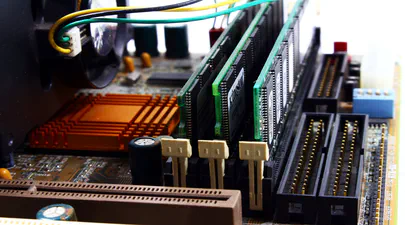
How To Extend Volatile System Memory (RAM) using Persistent Memory on Linux
Intel(R) Optane(TM) Persistent Memory delivers a unique combination of affordable large capacity and support for data persistence. Electrically compatible with DDR4, large capacity modules up to 512GB each can be installed in compatible servers alongside DDR on the memory bus.
Intel’s persistent memory product can be provisioned in a volatile “Memory Mode” which replaces DRAM volatile capacity with the persistent memory capacity, and persistent “AppDirect” mode which presents both DRAM and persistent memory to the operating system and applications. Both modes are explained in more detail here . It is possible to configure a system to utilize a percentage of persistent memory as volatile and persistent, but this mixed-mode still provisions all the DRAM capacity as a Last-Level Cache.
Read More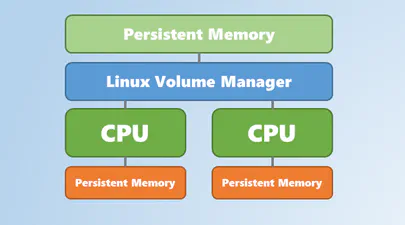
Using Linux Volume Manager (LVM) with Persistent Memory
In this article, we show how to use the Linux Volume Manager (LVM) to create concatenated, striped, and mirrored logical volumes using persistent memory modules as the backing storage device. Specifically, we will be using the Intel® Optane™ Persistent Memory Modules on a two socket system with Intel® Cascade Lake Xeon® CPUs, also referred to as 2nd Generation Intel® Xeon® Scalable Processors.
Contents
How to Create a Bootable Windows USB in Fedora Linux
In this tutorial, I am going to show you how to create a Windows Server 2019 bootable USB in Linux, though any Windows version will work. I am using Fedora 30 for this tutorial but the steps should be valid for other Linux distributions as well.
Here’s what you need:
Windows Server 2019 ISO (or Windows 10 ISO)
WoeUSB Application
A USB key (pen drive or stick) with at least 6 Gb of space
Read More

Percona Live 2019
I will be speaking at this year’s Percona Live event. Percona Live 2019 takes place in Austin, Texas from May 28-30, 2019 at the Hyatt Regency . You can register for the event and check out the schedule of talks. See you there.
About Percona Live
Percona Live conferences provide the open source database community with an opportunity to discover and discuss the latest open source trends, technologies and innovations. The conference includes the best and brightest innovators and influencers in the open source database industry.
Read MoreCategories
- 3D Printing ( 7 )
- AI ( 4 )
- Books ( 2 )
- Cloud Computing ( 1 )
- Conferences ( 2 )
- CXL ( 15 )
- Data Center ( 2 )
- Development ( 2 )
- Events ( 2 )
- Hardware ( 1 )
- How To ( 35 )
- Linux ( 31 )
- Machine Learning ( 1 )
- OrcaSlicer ( 2 )
- Performance ( 2 )
- Persistent Memory ( 1 )
- PMEM ( 1 )
- Product Manager ( 1 )
- Projects ( 3 )
- Servers ( 1 )
- Storage ( 1 )
- System Administration ( 2 )
- Troubleshooting ( 4 )
- Ubuntu ( 1 )
- Vector Databases ( 1 )
Tags
- 3D Printing
- 3MF
- ACPI
- ACPI-CA
- Acpidump
- Active-Memory
- Agent
- AI
- AMD
- API
- Apple Silicon
- Arcade
- Artificial Intelligence
- AWS EC2
- Bash
- Benchmark
- Blister Pack
- Book
- Boot
- Bootable-Usb
- Build From Source
- Buyer's Guide
- C
- C-2
- Chat Completions
- Chat GPT
- ChatGPT
- Clflushopt
- Cloud
- CMake
- Code Tunnel
- Code-Server
- Codespaces
- Compute Express Link
- Cpu
- Custom GPT
- Custom-Kernel
- CXL
- CXL 1.0
- CXL 1.1
- CXL 2.0
- CXL 3.0
- CXL Devices
- CXL Specification
- Data Center
- DAX
- Daxctl
- Debugging
- Dell
- Development
- Device-Mapper
- Dm-Writecache
- DRAM
- Edge
- Enfabrica
- Esxi
- Fastfetch
- Featured
- Fedora
- Firmware
- Free AI Models
- Frequency
- FSDAX
- G-Code
- Generative Prompt Engineering
- Git
- Governor
- Gpg
- GPT
- Gpt-3
- Gpt-4
- GPU
- Grafana
- H3 Platform
- Home Lab
- HPE
- Iasl
- Intel
- Ipmctl
- Java
- Kernel
- Kvm
- Lenovo
- Linux
- Linux Kernel
- Linux-Volume-Manager
- LLM
- Lvm
- Machine Learning
- MacOS
- Mainline
- MAME
- Memory
- Memory Management
- Memory Mapping
- Memory-Tiering
- Micron
- Microsoft
- ML
- Mmap
- Movdir64b
- Mysql
- Napkin Math
- NDCTL
- Neofetch
- NIM
- NUMA
- Nvdimm
- NVIDIA
- NVIDIA Builder
- NVIDIA Developer Program
- Ollama
- Open Source
- Open WebUI
- Optane
- OrcaSlicer
- Pagemap
- PCIe
- Percona
- Performance
- Performance Tuning
- Persistent Memory
- Personal Branding
- Physical Address
- Physical Memory
- Pmdk
- PMem
- Powersave
- Procfs
- Product Manager
- Programming
- Prometheus
- Prompt Engineering
- Python
- Qdrant
- QEMU
- RAG
- Remote Development
- Retimers
- Retrieval Augmented Generation
- Rust
- Samsung
- Self-Hosting
- Server
- Servers
- SNC
- SSH
- STREAM Benchmark
- Sub-NUMA Cluster
- Sub-NUMA Clustering
- Supermicro
- Switches
- Sysadmin
- Sysfs
- System Administration
- System Information
- System-Ram
- Technical Documentation
- Terminal
- Tiered-Memory
- Travel Moves
- Tutorial
- Ubuntu
- Ubuntu 22.04
- Vector Databases
- Virtual Memory
- Vmware
- Vmware-Esxi
- Vpmem
- VS Code
- Vsphere
- Website
- Window
- Windows
- Windows-Server
- Working-Set-Size
- Wss
- Xcode